
Building
Best siding and roofing for a backyard office or shed
Cladding, roofing and trim choices that suit your climate and still look good in ten years.
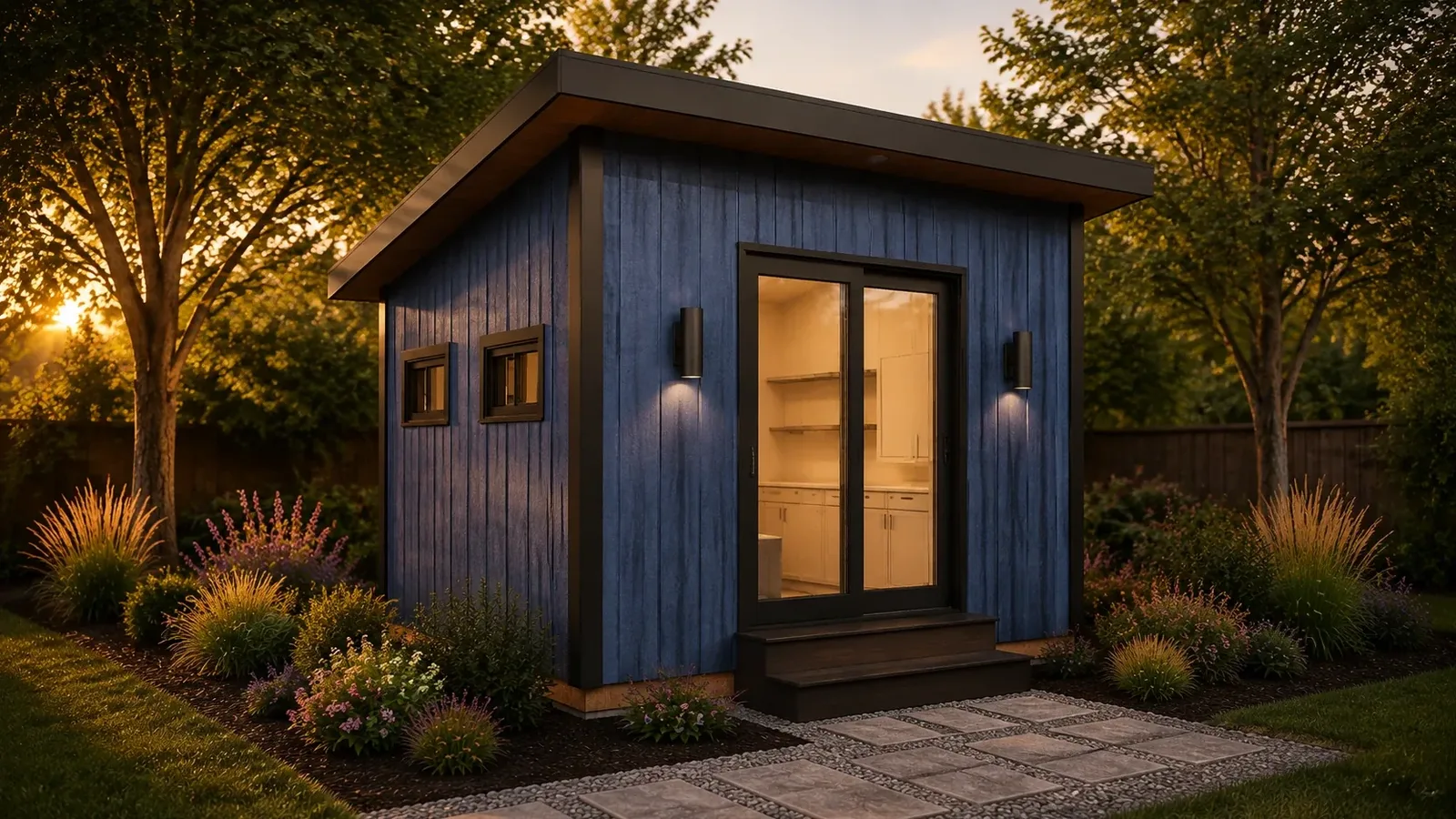
Siding and roofing set the character of the building and decide how much maintenance it asks for over the next twenty years. Both decisions come down to the same two questions: what does your house look like, and what does your weather do?
Siding
| Siding | Character | Maintenance | Notes |
|---|---|---|---|
| Board-and-batten | Traditional, vertical, textured | Repaint or re-stain every 5–7 years | Hides seams well; forgiving to install |
| Smooth panel, dark finish | Modern and architectural | Low, if the finish is good | The look in our Modern designs |
| Painted lap siding | Cottage, familiar, domestic | Repaint every 5–8 years | Widely available and easy to source |
| Fiber cement | Takes any of the above profiles | Very low | Best in coastal and humid climates |
The safest rule is to either match the house or contrast it deliberately. A backyard building that lands halfway — nearly the same color, not quite the same material — reads as an accident. Matching reads as planned; a confident dark building behind a pale house also reads as planned.
Roofing
Standing-seam metal is durable, sheds snow readily and suits the low-slope shed rooflines on most of our designs. It costs more up front and rewards you with decades of not thinking about it.
Architectural asphalt shingles cost less, are easy to source locally, and work well on a gable roof like the Golf Studio's. They are also the more forgiving option for a first-time builder.
Both are drawn with their underlayment and flashing details in every plan set, which is the part that actually keeps water out — those details sit on the section and detail sheets, and our guide to reading the drawings explains how to find them. Roofing failures are almost never the roofing itself; they are the flashing at the edges, the penetrations and the transitions.
Trim and color
Trim does more work than most people expect. Dark bronze or black window trim reads modern against almost any siding color; painted wood trim reads traditional and softer. Either can be right — what fails is having no consistent position.
Keep the palette to three colors at most:
- Body — the main siding color, and the one to be most conservative with.
- Trim — window and door surrounds, corners, fascia.
- One accent — usually the door. This is where to be bold, because it is the cheapest thing to repaint.
Let the climate have the final say
- Coastal or humid: fiber cement or metal over raw wood. Salt air and moisture are relentless.
- High UV: a quality exterior paint or stain with UV inhibitors, reapplied on schedule rather than when it looks bad.
- Heavy snow: a metal roof and a pitch that sheds — and think about where the snow lands when it does.
- Wildfire-prone: check local requirements; some areas mandate specific ignition-resistant assemblies.
Whatever you pick, the drawings do not change. Siding and roofing are finish choices applied over the same structure, so you can decide late — after you have seen the framing up and lived with the building's proportions for a week. That also means the material decision does not have to hold up choosing a plan or ordering one.
Common Questions
Frequently asked questions
- What is the best siding for a backyard office?
- For most sites, painted lap siding or board-and-batten is the best balance of cost, availability and appearance. In coastal or humid climates, fiber cement is worth the extra cost for how little maintenance it needs.
- Metal roof or shingles for a shed?
- Standing-seam metal lasts longer, sheds snow better and suits low-slope shed roofs. Architectural asphalt shingles cost less, are easier to source and are more forgiving to install on a gable roof. Both are detailed in every plan set.
- Do I have to choose my materials before I buy the plans?
- No. Siding, roofing, trim and color are finish choices applied over the same structure, so you can decide once the shell is up and you can see the building in place.
Keep Reading
Related guides
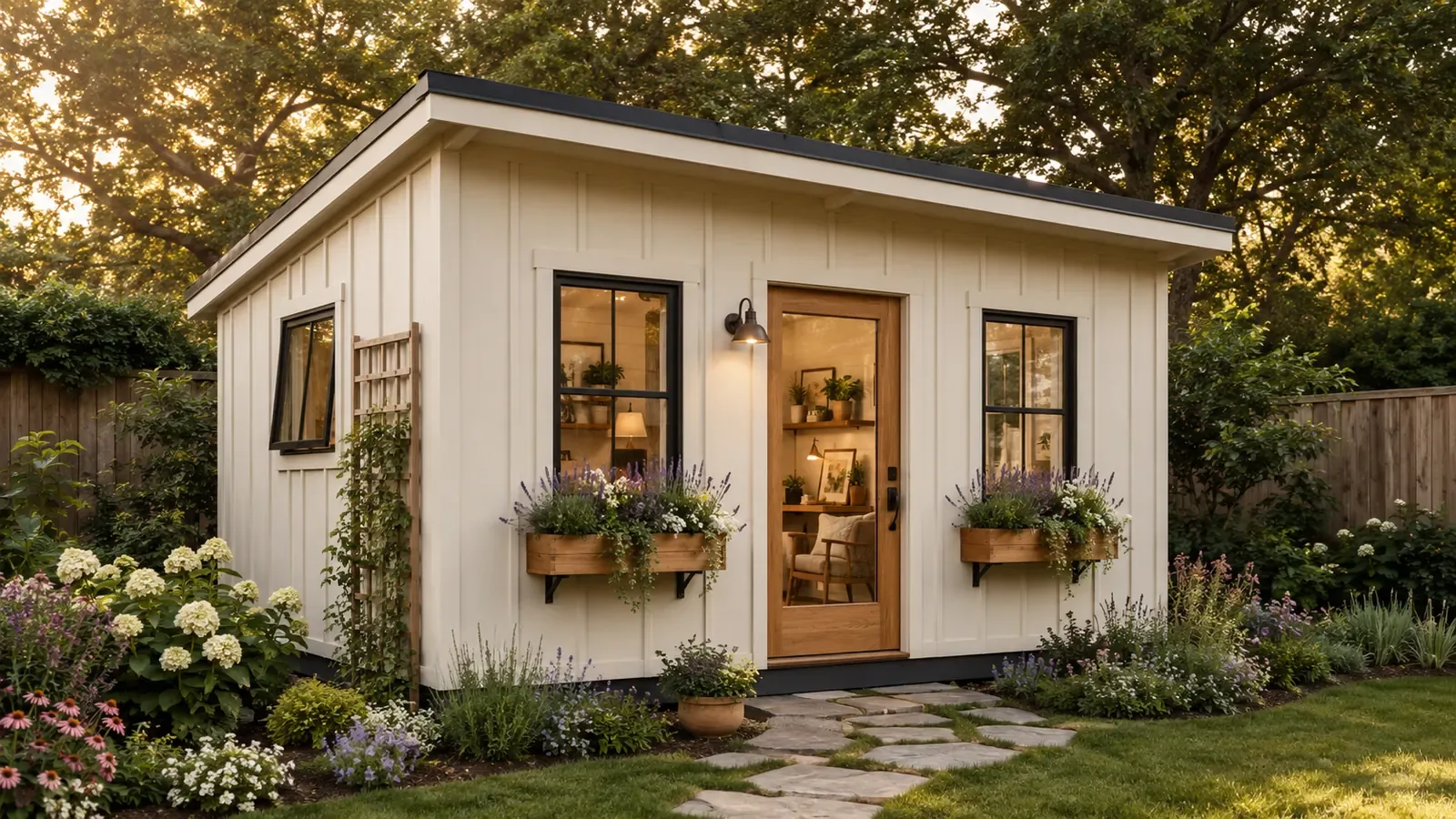
Where to put a backyard office: sun, drainage, access and setbacks
Position is the one decision you cannot revise after the foundation goes in.
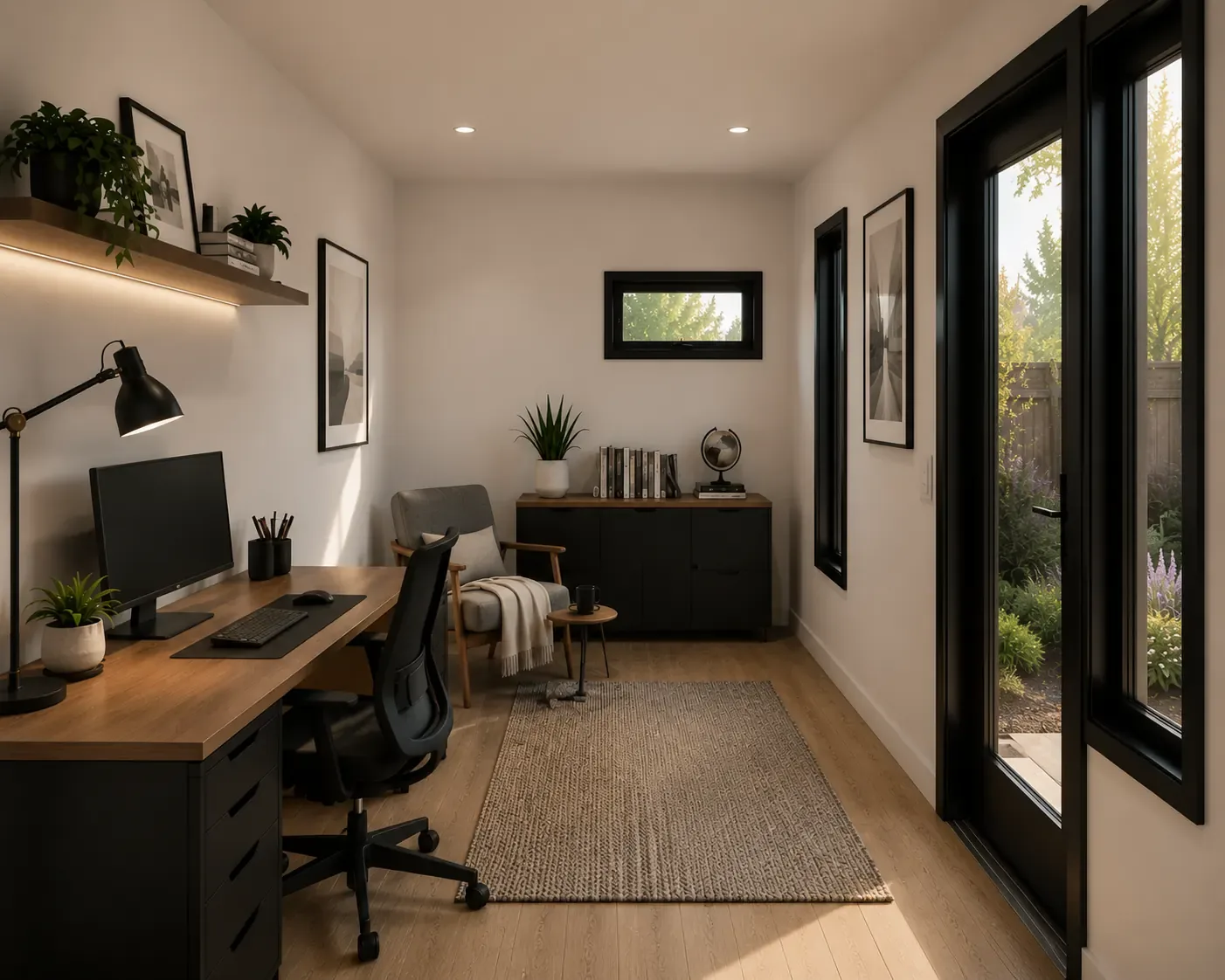
How much does it cost to build a backyard office?
Real per-square-foot ranges, what drives them, and how to turn a material list into a budget.
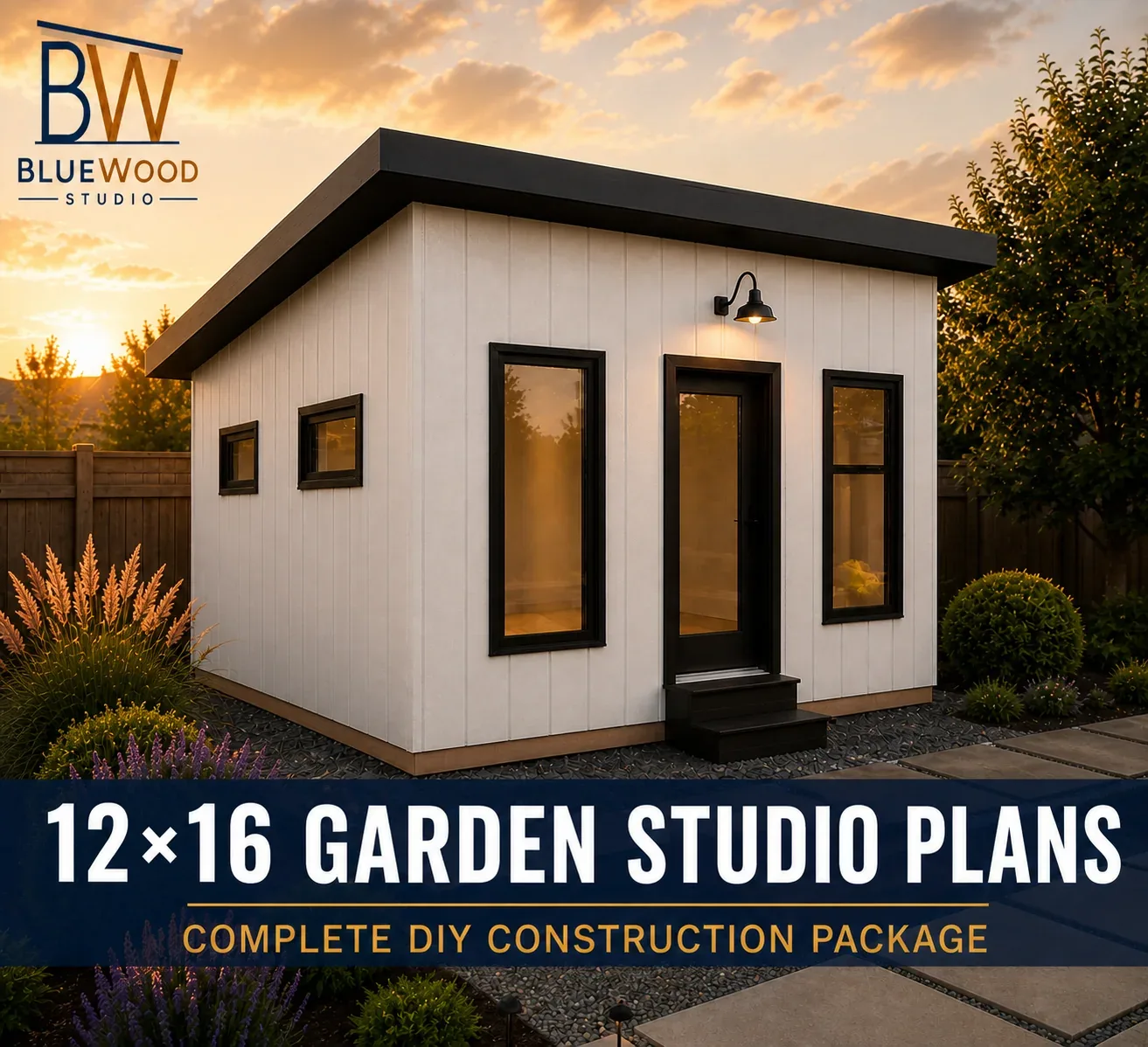
How to choose a backyard office or shed plan
Match the footprint, layout and roofline to how you will actually use the building.