
Building
Can you build a backyard office yourself?
What the build actually asks of you, stage by stage, and where most people bring in help.
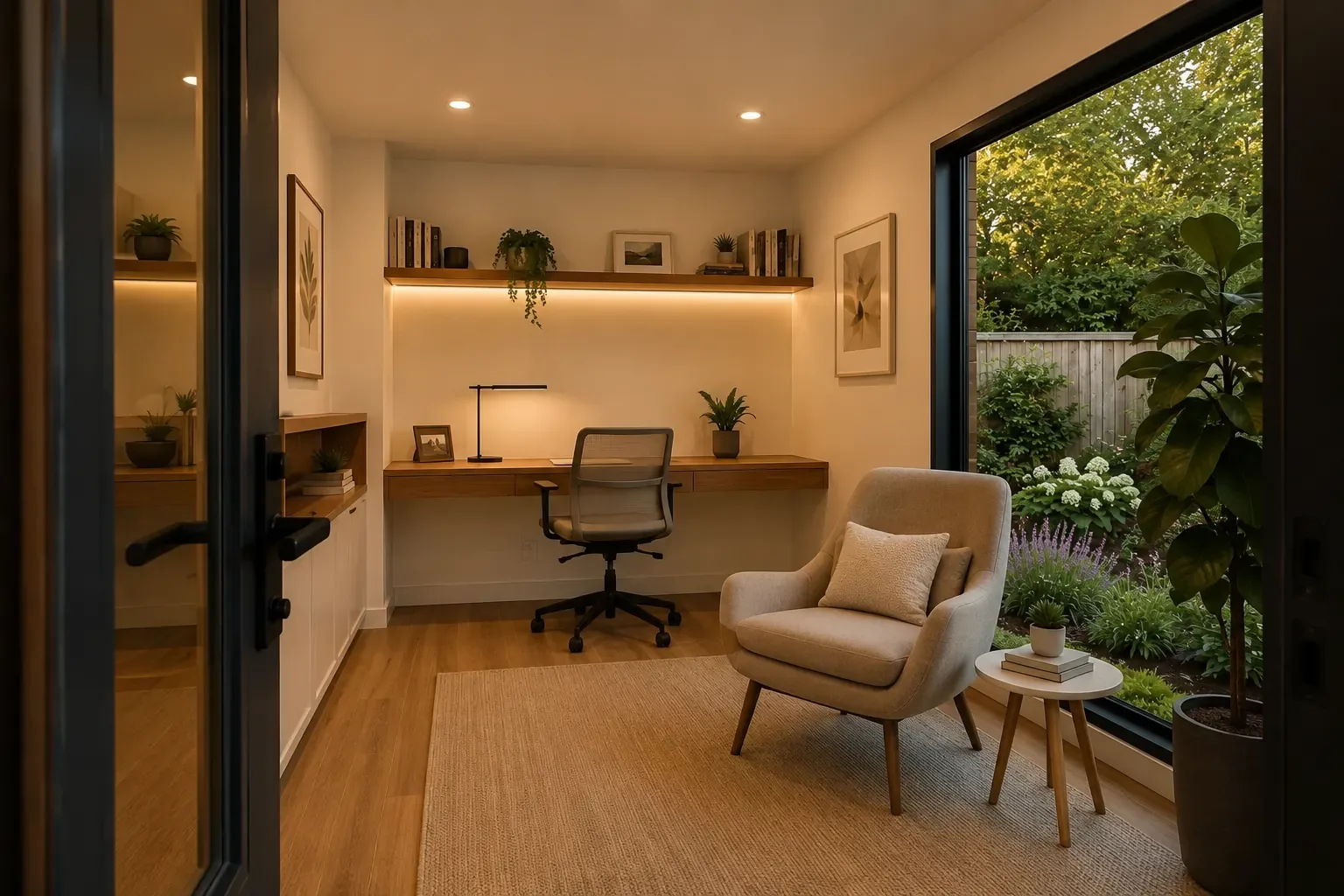
A backyard office can be a DIY project if your experience matches the work. Check each design’s skill rating: some are DIY Friendly, while the Sauna Studio calls for an Experienced Builder. Framing, lifting roof members, weatherproofing and coordinating licensed trades each need their own plan.
What follows is what the build actually involves, so you can decide honestly rather than optimistically.
What the build asks of you, stage by stage
| Stage | Difficulty | Worth hiring out? |
|---|---|---|
| Site prep and foundation | Moderate — physical, and unforgiving of error | Often, for a slab or on a slope |
| Floor and wall framing | Straightforward with a helper | No — this is the most learnable part |
| Roof framing and sheathing | The hardest day of the build | Sometimes, for a gable roof |
| Weatherproofing and siding | Fiddly but forgiving | No |
| Windows and doors | Moderate — flashing is what matters | No, if you follow the details |
| Electrical | Licensed work in most jurisdictions | Yes — and usually legally required |
| Insulation and interior finish | Easy, slow, satisfying | No |
The two things that actually stop people
It is rarely the carpentry. In practice, two things derail backyard builds.
The first is getting the foundation out of level or out of square. Everything downstream compounds it: walls that do not meet, a roof that does not sit, doors that will not close. Take a whole day over the base if you need to, measure the diagonals, and do not proceed until they match.
The second is starting a stage without the materials to finish it. An open, un-sheathed frame in the rain is a genuinely bad day. Read the whole sequence before you start, and buy each stage complete.
How long it takes
Plan the schedule by stage: site work and foundations, framing and roofing, weatherproofing, inspections, utility work and interior finishes. An experienced crew’s shell-framing schedule is not the same as a completed, usable office. Local trades, weather and material lead times can extend the work.
The tempo matters more than the total. A build that runs continuously tends to finish; one that stops for a month often does not restart.
Tools you will actually need
- Circular saw, cordless drill/driver, and a decent tape measure
- A four-foot level and a chalk line — squareness is bought here
- Framing square, speed square and a framing hammer
- Ladders or trestles, and a second pair of hands for wall raising
- Safety glasses, hearing protection and gloves. Not optional.
Nothing on that list is exotic, and most of it can be hired for a weekend if you would rather not buy it.
Start by reading the drawings
Before the first cut, read the plan set end to end — not as a reference to dip into, but as a document. Our guide to reading construction drawings explains what each sheet does. Builders who read the whole set first make far fewer expensive mistakes than builders who open it at the page they think they need.
Common Questions
Frequently asked questions
- Do I need construction experience to build a backyard office?
- No, but you do need to be comfortable with basic power tools and willing to follow drawings precisely. Our designs use rectangular framing, standard lumber sizes and simple rooflines specifically so that a careful first-timer can complete one.
- How long does it take to build one of these?
- Allow several weekends or longer, depending on experience, help, site work, inspections, utilities and finishes. Estimate each stage separately and confirm trade and material availability before setting a completion date.
- Can I build it on my own, without help?
- Most of it, yes — but raising framed walls and handling roof sheathing are genuinely two-person jobs. Arrange help for those days even if you do everything else solo.
- Which parts should I hire a professional for?
- Electrical work, which is licensed work in most jurisdictions and normally requires a permit and inspection. Many people also hire out the foundation, especially for a slab or on a sloping site.
Keep Reading
Related guides
How much does it cost to build a backyard office?
Real per-square-foot ranges, what drives them, and how to turn a material list into a budget.
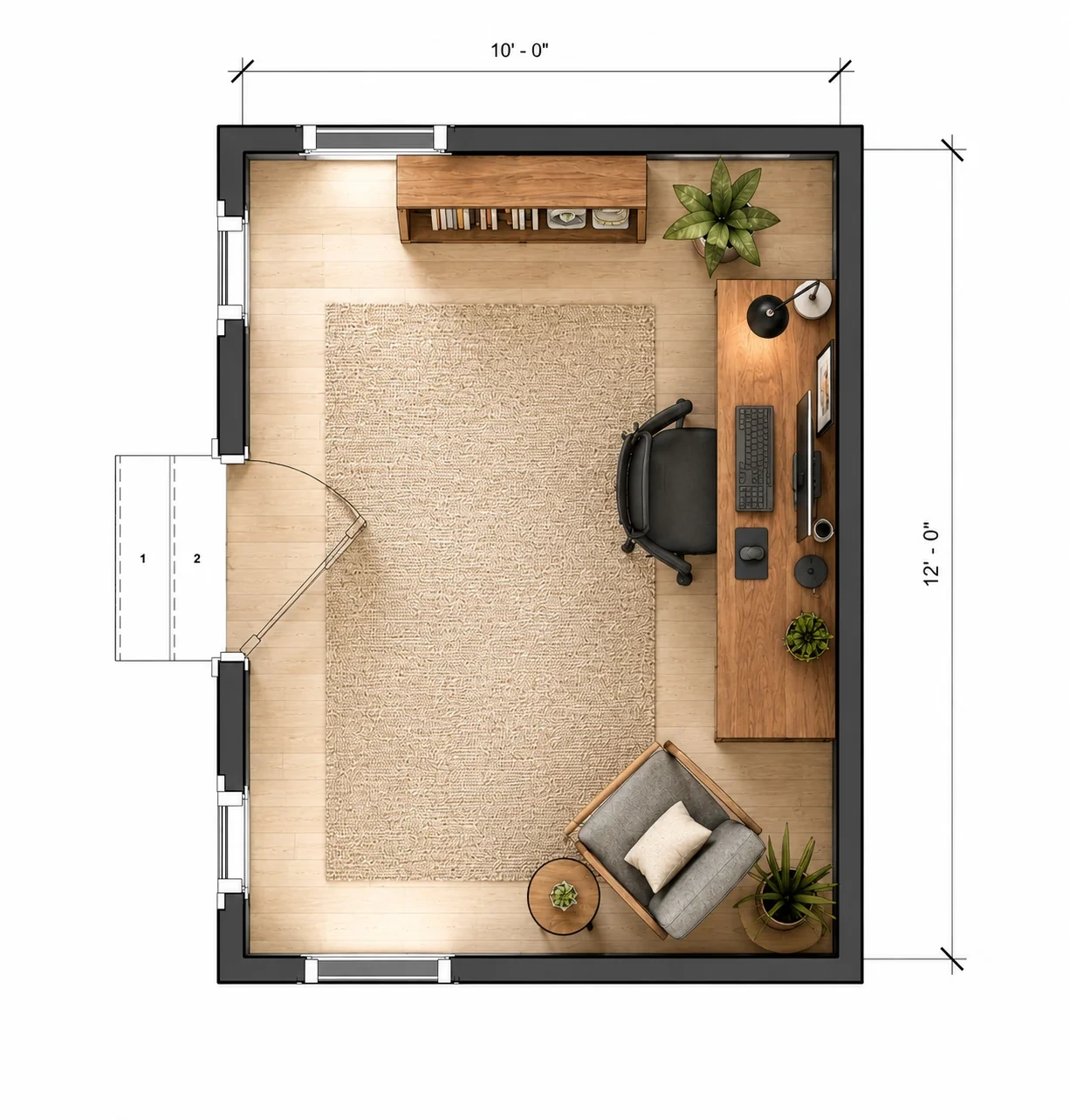
How to read shed and backyard office construction plans
Floor plans, elevations, sections and schedules, explained in plain language.
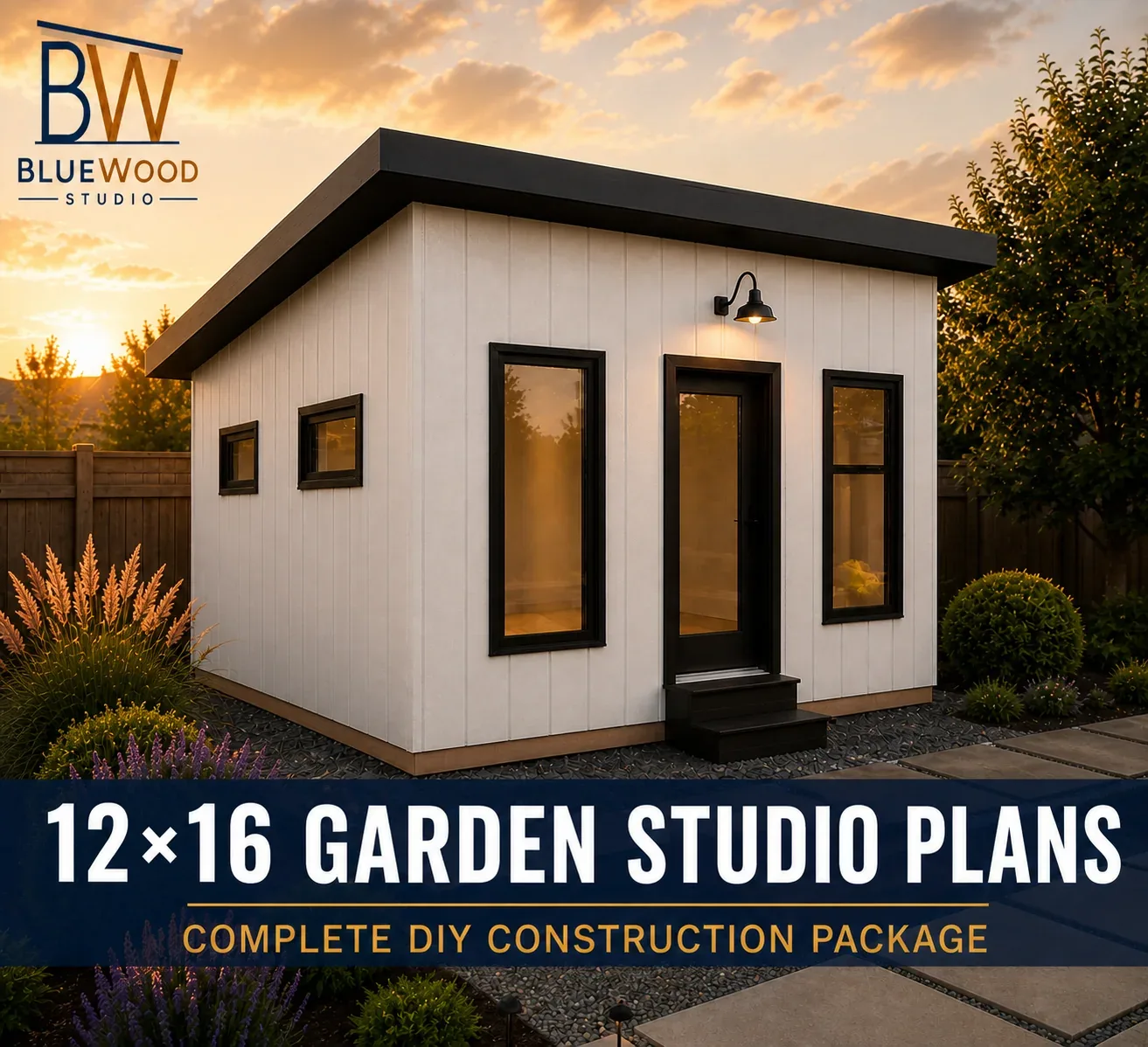
How to choose a backyard office or shed plan
Match the footprint, layout and roofline to how you will actually use the building.