
By Building Type
Backyard gym shed: size, ceiling height and flooring
What a home gym actually needs from a building — floor area, headroom, flooring, ventilation and power.
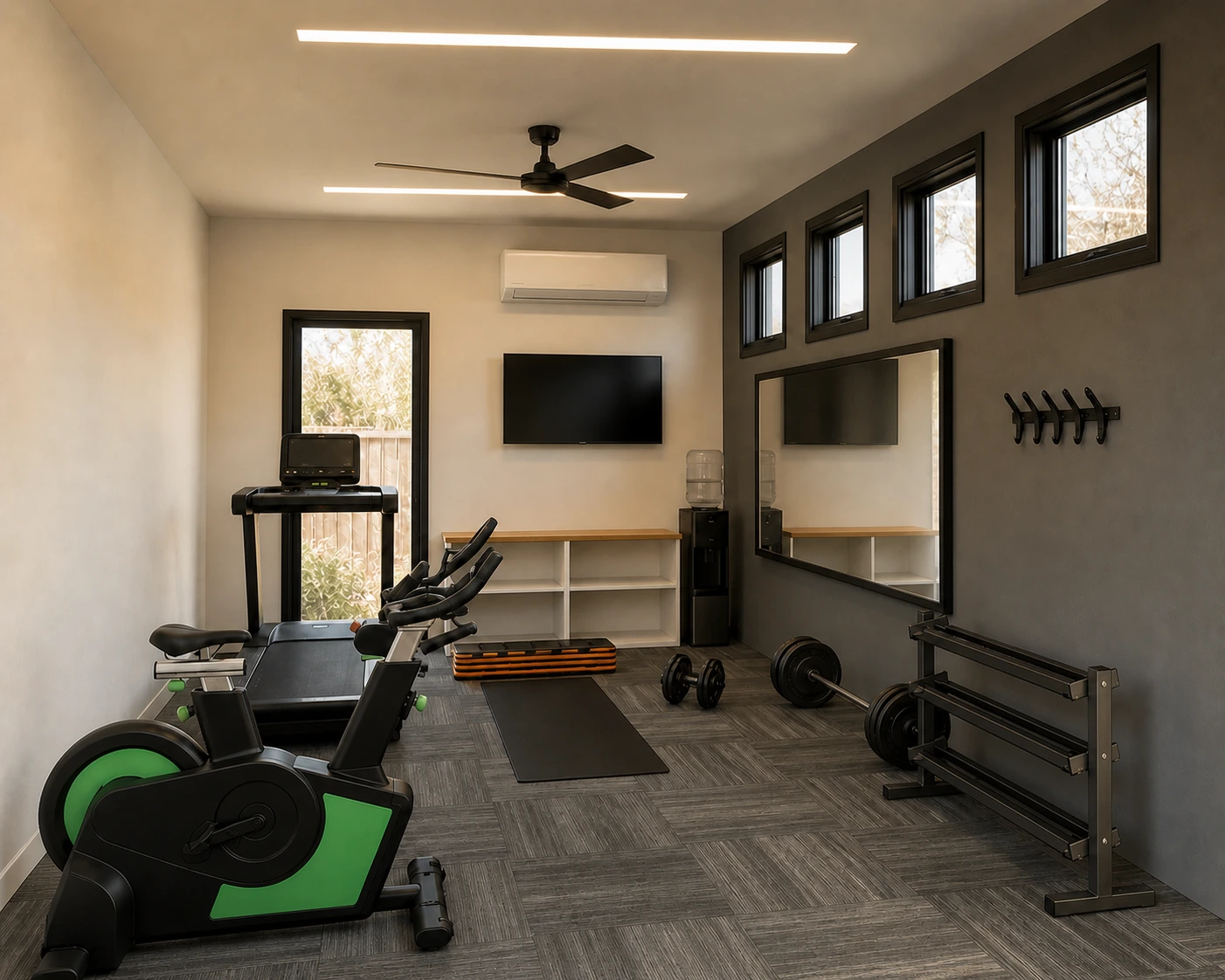
A backyard gym is one of the easier outbuildings to get right, because the requirements are concrete: enough clear floor, enough headroom, a floor that can take the load, and enough air movement that the room does not become unpleasant in July.
How much floor area you actually need
Equipment footprints are smaller than people assume; the space you need around them is larger.
| Setup | Rough floor area | Fits in |
|---|---|---|
| Mat, dumbbells, bands, bench | 60 – 80 sq ft | Comfortably in 10 × 10 |
| Rack, barbell, bench, plates | 100 – 130 sq ft | 10 × 12 at a squeeze; 12 × 16 properly |
| Rack plus a cardio machine | 140 – 180 sq ft | 12 × 16 |
| Rack, cardio, and floor space for stretching | 180+ sq ft | 12 × 16 as a minimum |
The number that catches people out is the clear space around a barbell. A seven-foot bar needs room to load plates at both ends and room to walk around, which in practice means about four feet of clear width beyond the rack itself.
The BlueWood Fitness Studio is a 12 × 16 ft building — 192 square feet — laid out with room for cardio equipment, free weights, a stretching area and organised storage.
Ceiling height
The Fitness Studio has a 9-foot ceiling, which covers the great majority of home gym use. What that means in practice:
- Overhead pressing — comfortable for most people. A tall lifter pressing a barbell overhead needs roughly 8 to 8.5 feet, so 9 feet gives headroom without being generous.
- Pull-up bar — fine on a rack-mounted bar at standard height.
- Skipping rope — workable, though a taller room is more forgiving.
- Box jumps and tall plyometrics — check your own numbers. Your height plus box height plus jump height adds up faster than expected.
Flooring and what sits under it
Gym flooring has two jobs: protecting the structure from dropped weight, and giving you a stable surface to work from.
- Rubber tiles or rolls, 3/8" to 3/4" — the standard answer. Thicker for free weights, thinner for cardio and bodyweight work.
- Horse stall mats — the inexpensive route. Heavy, effective, and they take a few weeks to stop smelling.
- Plywood platform under the rubber — worth it if you deadlift, because it spreads the load rather than concentrating it.
Underneath that, the foundation matters more here than for most buildings. A slab gives the most solid, least springy floor and handles concentrated load best. A well-built pier or skid foundation works, but pay attention to the floor framing — see foundation options for the trade-offs.
Ventilation, heating and cooling
A small, well-insulated room with someone exercising in it heats up fast, and the humidity climbs with it. This is the detail that most often makes a backyard gym unpleasant rather than unusable.
An opening window on each of two walls gives cross-ventilation and costs nothing to run. For year-round use, a mini-split heat pump handles both summer cooling and winter heating, and it is the single upgrade people say made the difference. A dehumidifier is worth considering in humid climates — sweat and steel are a bad combination for equipment.
Power and the rest
A dedicated circuit from the main panel covers lighting, a fan or mini-split, a cardio machine and a sound system. As with any backyard building, that circuit almost always needs its own permit and a licensed electrician — the same considerations as a backyard office.
Two finishing touches worth planning early rather than retrofitting: mirrors, which need solid backing behind the wall finish, and storage, because a gym with nowhere to put plates and bands becomes a room you have to tidy before you can use it.
Common Questions
Frequently asked questions
- What size shed do I need for a home gym?
- A mat, dumbbells and a bench fit comfortably in 10 × 10. A rack, barbell and bench want 100 to 130 square feet, so 12 × 16 (192 sq ft) is the practical size once you add a cardio machine or floor space for stretching.
- Is a 9 foot ceiling high enough for a home gym?
- For most people, yes. Overhead barbell pressing needs roughly 8 to 8.5 feet for a tall lifter, so 9 feet works, and a rack-mounted pull-up bar fits fine. Check your own numbers if you do box jumps or tall plyometrics — your height plus box height plus jump height adds up quickly.
- What flooring is best for a backyard gym?
- Rubber tiles or rolls between 3/8" and 3/4" thick are the standard choice — thicker for free weights, thinner for cardio and bodyweight work. Horse stall mats are a cheaper alternative. If you deadlift, add a plywood platform under the rubber to spread the load.
- Do I need air conditioning in a backyard gym?
- Not strictly, but a small insulated room heats up quickly with someone exercising in it. Opening windows on two walls give cross-ventilation at no running cost; a mini-split heat pump makes the building genuinely usable year-round and handles winter heating too.
Keep Reading
Related guides
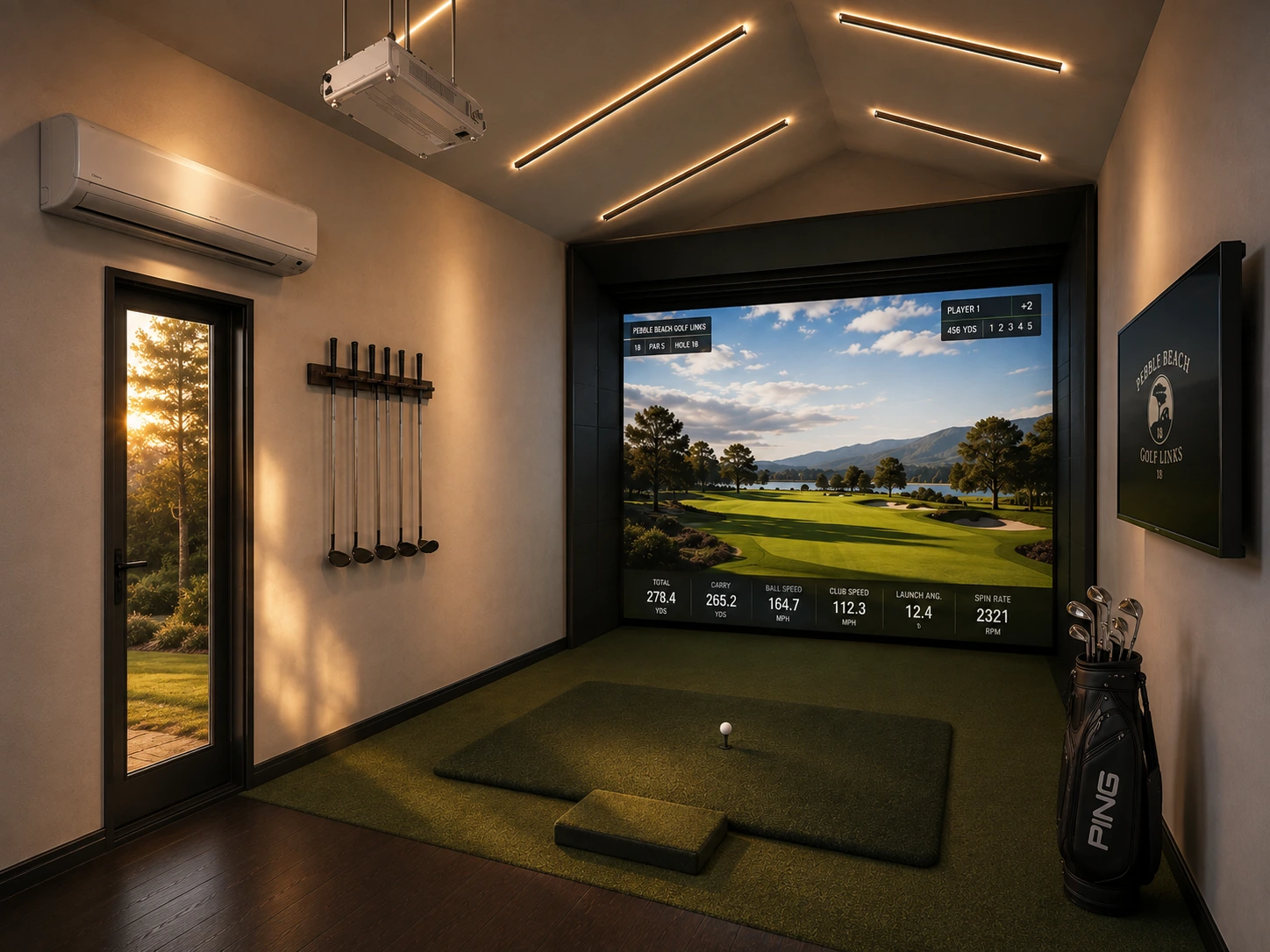
Golf simulator shed size: how much room do you need?
Width, depth and ceiling height for a backyard simulator bay — and how to check a building will fit yours.

Shed and backyard office foundations: skids, piers or slab
How to pick between the three, based on your site, soil, climate and budget.
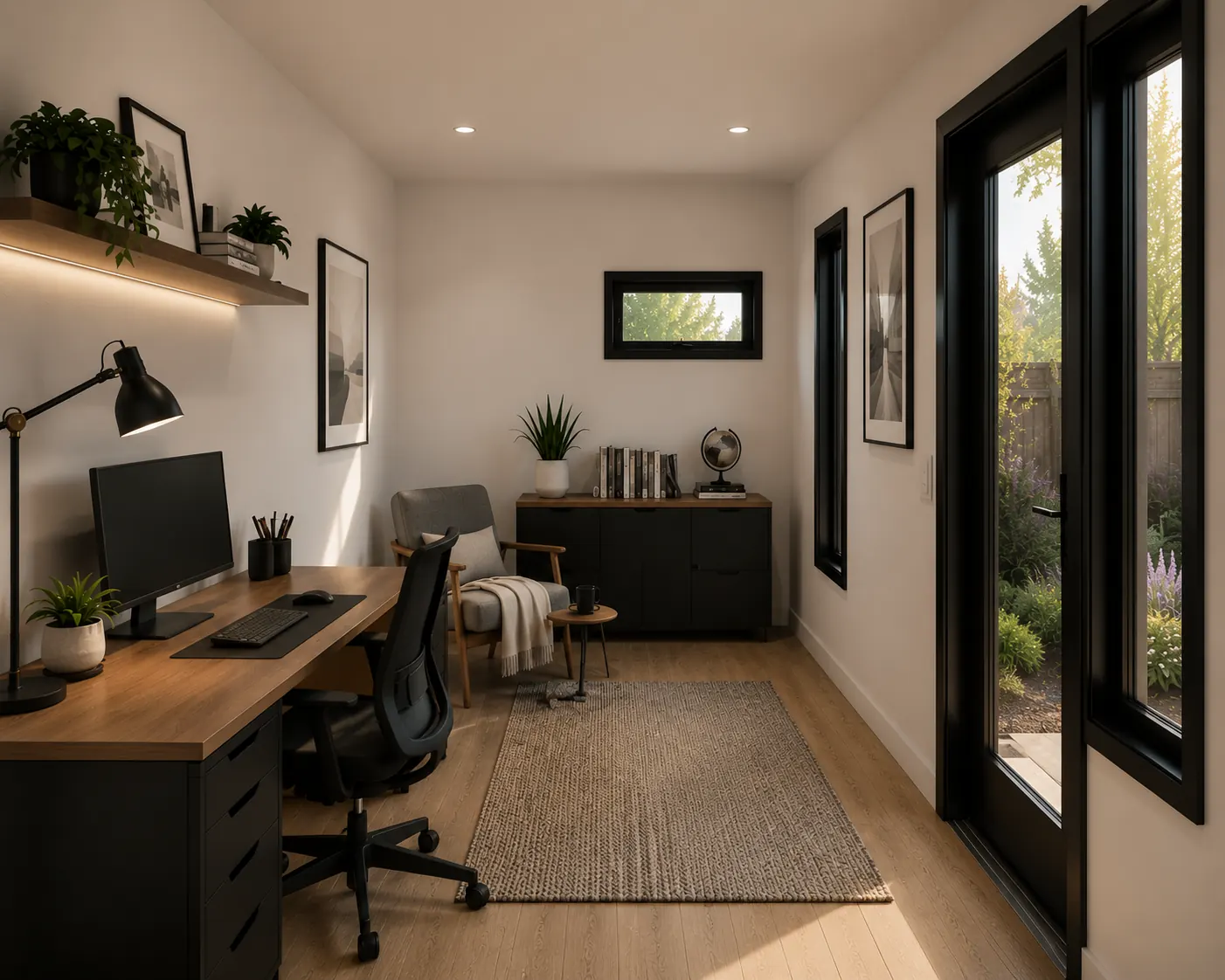
How to build a backyard office you can use year-round
Insulation, power, internet and light — the four things that separate an office from a shed with a desk in it.